
advantages of using flexible PCBs
As technology continues to push towards smaller form factors, designers and engineers have to find ways to fit components in the tightest of spaces. This is where flexible PCBs are a great solution. The ability to bend and fold a circuit board to accommodate its environment can save on the overall package size, weight and power requirements of the final product. This is especially true for high-end consumer electronics, where space is at a premium, and in aerospace applications, where space can be expensive.
There are a few rules to consider when designing a flexible circuit board. For instance, the circuit must be designed with the proper layer stack-up to avoid damage during the manufacturing process and to ensure that it meets the design requirements. Typically, this means that the layer stack-up must be designed with no plated through hole vias placed at areas expected to bend. Instead, a hatched polygon should be used as this will better resist the force of bending. It is also important that the flexible pcbs is rounded in these areas where it is expected to be bended. This will improve its tear resistance compared to sharp 90 degree corners.
These rules are essential to keep in mind when deciding on the best circuit for your specific application. If you’re unsure of which type of circuit to use, it’s a good idea to ask the manufacturer for help. They can provide a detailed calculator that will allow you to determine the cost of your design. It is also recommended that you speak with a flex PCB designer to discuss layout guidelines. They can help you design a flexible circuit that will meet all of your needs.
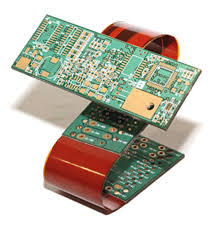
What are the advantages of using flexible PCBs
The most common types of flex circuits are single-sided and double-sided. The single-sided version has a conductive layer on one side of the dielectric (polyimide or polymer film) while the double-sided option has connections on both sides. A specialized type is rigid flex, which has stiffeners on the back to prevent it from deforming. Rigid flex is often used in products that handle heavy currents or generate heat, such as high-speed data communication equipment or industrial devices.
Another benefit of flex circuits is their lower weight. Thicker substrates in rigid boards add to the overall weight of a circuit, but flex circuits are made with the thinnest dielectric materials available. This helps reduce the overall weight of a product and makes it easier to transport.
In addition, flex circuits can be folded and rolled up into unique 3D shapes and can fill unused space in the final product. This is especially important in automotive applications, where reducing weight can increase fuel efficiency and range for hybrid or electric vehicles. In fact, a flex circuit can take up less than half the space of a traditional automotive wiring harness.