
Coating Materials for Rigid Flex PCBs
Rigid-Flex PCBs combine elements of both rigid circuit boards and flexible ones, offering the best of both worlds for various applications. They are often seen in consumer electronics such as tablets, phones and cameras due to their sleek design and increased functionality, as well as in medical devices such as pacemakers for their space efficiency and ability to bend around the body. They are also used in aerospace and defense applications, as well as industrial machinery and other commercial equipment that requires the benefits of a flexible and compact circuit board.
In addition to the physical properties that make them ideal for a variety of applications, rigid-flex pcb are able to bend and fold without losing conductivity and without introducing mechanical stress. This enables them to be packed more tightly together in smaller packages and allows them to accommodate a wider range of component sizes. However, even though they are extremely versatile and can be manipulated into different shapes, Rigid flex PCBs must meet stringent requirements in order to ensure reliability and quality.
As such, it is important to test the integrity of these circuits, especially in environments where they are likely to be subjected to extreme temperatures. This can be achieved by conducting thermal cycle tests, where the circuit is gradually exposed to changing temperatures, or thermal shock tests, where it is rapidly subjected to changes in temperature. In addition, electrical tests should be conducted to check that the conformal coating is providing adequate insulation.
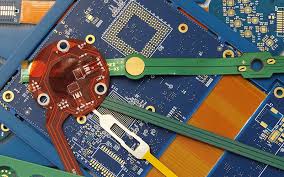
Conformal Coating Materials for Rigid Flex PCBs
The type of conformal coating material you use in your circuit board will impact the performance of the final product, and each has its own unique properties and characteristics suitable for specific applications. The most common conformal coating materials include epoxy, acrylic, silicone and polyurethane. These can be applied by spraying, dipping or brushing and provide protection for both rigid and flexible film laminates as well as metal and glass substrates. They are characterized by their excellent abrasion and chemical resistance, as well as good humidity resistance. They can also be cured quickly, enabling them to be reworked and reassembled for reuse.
Epoxy conformal coatings are available in single- or two-component systems and provide high abrasion and chemical resistance. However, they are susceptible to humidity, and their viscosity will change over time, reducing the processing window and making them difficult to dispense and apply for rework. This is why it is important to use a process that can be controlled and monitored to ensure consistency and quality.
For mission-critical applications, you may want to consider using a parylene conformal coating, which offers the best combination of durability and abrasion resistance with humidity tolerance and superior thermal conductivity. A parylene coating is also the most durable of all the conformal coatings, and it can be cured in a few seconds to minimize downtime in your manufacturing process.