Last Updated:
The government is launching an innovation challenge to find low-cost, easy-to-maintain, and effective technologies to reduce PM2.5 and PM10 emissions from old vehicles
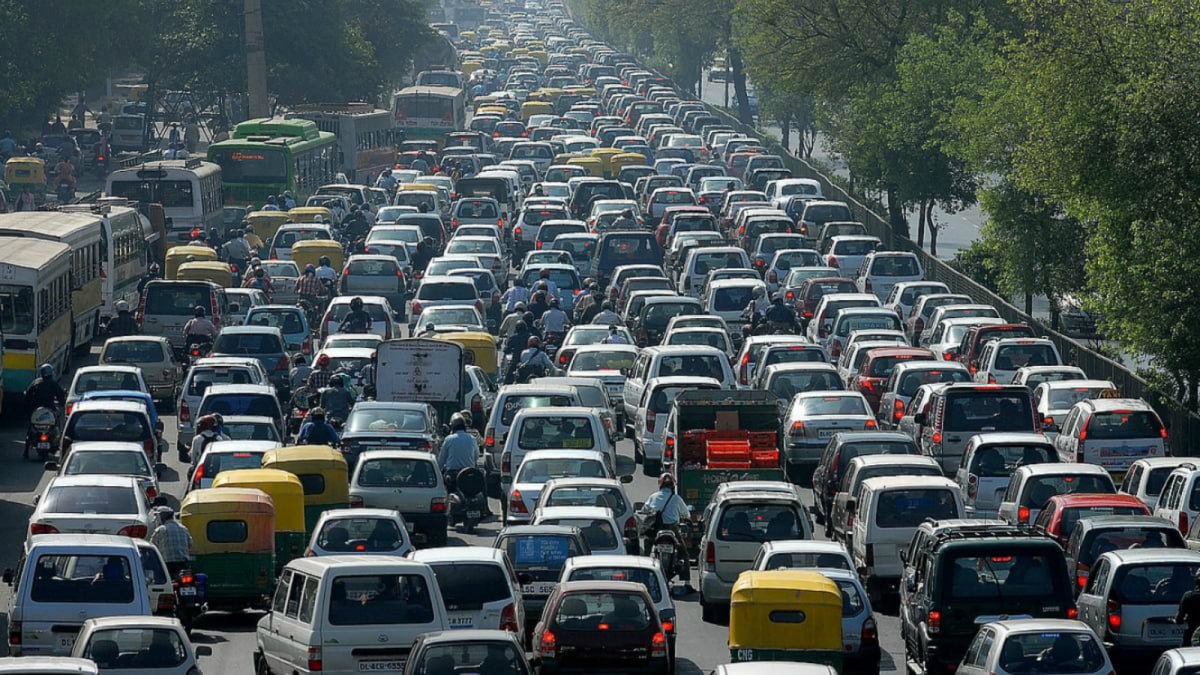
In Delhi, end-of-life vehicles, including diesel ones older than 10 years and petrol ones older than 15 years, are not allowed on the roads. From July 1, there was a refuelling ban imposed on these vehicles. However, following public outrage, the ban was revoked early this month. Representational image
Days after revoking the controversial refuelling ban on end-of-life vehicles (ELVs), the Delhi government has launched an innovation challenge to identify low-cost, easy-to-maintain technologies to reduce harmful emissions from these ageing automobiles.
In Delhi, end-of-life vehicles, including diesel ones older than 10 years and petrol ones older than 15 years, are not allowed on the roads. From July 1, there was a refuelling ban imposed on these vehicles. However, following public outrage, the ban was revoked early this month.
On Thursday, Manjinder Singh Sirsa, the minister of environment in Delhi, issued a standing order launching an innovation challenge to find low-cost, easy-to-maintain, and effective technologies to reduce PM2.5 and PM10 emissions from old vehicles still operating in Delhi.
In the two-page order, seen by News18, Sirsa directed the Delhi Pollution Control Committee (DPCC) to launch the challenge in the next 30 days, and the result should be out in 90 days.
“The DPCC is directed to design and launch an Innovation Challenge focused on identifying and promoting low-cost, easy-to-maintain, and effective technological solutions capable of reducing/absorbing PM 2.5 and PM 10 emissions (of at least twice the amount emitted) from End-of-Life Vehicles (ELVs) operating within the territory of Delhi,” the order said.
The challenge will be open to individuals, startups, research institutions, and technology developers across India.
The proposed technologies or devices—installed inside or externally on the vehicles—should be designed to neutralise, capture, or offset PM2.5 and PM10 pollutants beyond the levels emitted by the ELV.
The device should be user-friendly, affordable, scalable, and viable for real-world conditions.
“An independent panel of technical experts shall be constituted for the purpose of evaluating the submissions,” Sirsa added.
The order further stated that a premier technical institute, such as the Indian Institute of Technology (IIT) Delhi, should be formally requested to lead this technical committee and participate in the evaluation and selection process.
The panel, he suggested, may also include representatives from environmental engineering institutes, automotive sector experts, and members from DPCC.
In addition, the minister has asked DPCC to show a formal outline of the project and the exact problem statement within the next five days.
The order, Sirsa said, was issued “…in view of the increasing environmental and public health concerns associated with pollution from End-of-Life Vehicles”.

Nivedita Singh is a data journalist and covers the Election Commission, Indian Railways and Ministry of Road Transport and Highways. She has nearly seven years of experience in the news media. She tweets @nived…Read More
Nivedita Singh is a data journalist and covers the Election Commission, Indian Railways and Ministry of Road Transport and Highways. She has nearly seven years of experience in the news media. She tweets @nived… Read More
view comments
- First Published: