
Pcb productions have curved edges
In the world of printed circuit board (PCB) production, the design and manufacturing process often involve precise cutting and shaping of the board to meet the needs of specific electronic devices. Typically, PCBs are rectangular or square in shape, but as the demand for more compact, flexible, and aesthetically pleasing designs grows, there is an increasing interest in curved edges and custom shapes. This leads to the question: can PCB productions have curved edges, and if so, how is this achieved?
Traditional pcb production methods typically involve cutting the board into standard shapes, such as squares or rectangles, using mechanical tools like routers, saws, or laser cutters. These methods provide excellent precision and efficiency, but they are usually designed for straight-line cuts. When it comes to curved edges, however, the process becomes more complex.
Curved edges require a different approach, as the tools used for standard PCB cutting may not be suited to handle the curvature without damaging the delicate traces or components on the board. The curvature could also affect the electrical performance of the board, especially if the curves are too sharp or the PCB material is not suited to bending or shaping. To overcome these challenges, specialized techniques and technologies are employed in PCB production to achieve curved edges without compromising the integrity or functionality of the board.
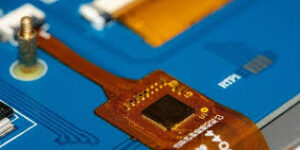
Can Pcb productions have curved edges?
Laser cutting is one of the most effective methods for achieving curved edges in PCB production. A focused laser beam is used to precisely cut the PCB along the desired curved path. This method allows for high precision, enabling the creation of smooth, clean curved edges without damaging the underlying components or traces. Laser cutting also minimizes the risk of warping the PCB material, which is essential when working with flexible or high-density boards. The laser can follow intricate designs and produce curves with tight radii, making it an ideal choice for custom-shaped PCBs.
V-groove cutting is a technique used to create custom shapes and curves in PCBs by scoring the material along the desired cut line. Although this method is typically used for straight cuts, it can also be adapted for creating curved edges. The process involves making shallow grooves along the curve’s path, and the PCB is then bent along these lines. This method works best for certain flexible PCBs and is often used when the PCB will be bent or folded during installation or use. V-groove cutting is commonly employed in the production of flexible or rigid-flex PCBs, where curved or rounded edges are necessary for fitting into compact spaces.
Mechanical milling involves using a rotating tool to trim the PCB along specific paths, including curved edges. While this technique can be more time-consuming than laser cutting, it provides another option for shaping curved edges in PCB production. The precision of the milling process ensures that the edges are smooth, and it allows for customization in the PCB’s overall shape. However, due to the mechanical nature of the process, it is essential to use a suitable tool and maintain precise control over the cutting speed and depth to avoid damaging the PCB.
In some cases, curved edges can be achieved by using flexible PCBs, which are made from materials such as polyimide that can bend or conform to various shapes. Flexible PCBs are often used in applications where the circuit needs to be wrapped around or shaped to fit a specific form factor, such as in wearable electronics, medical devices, and automotive applications. By using flexible PCB materials, designers can incorporate curved edges naturally into the design without the need for complex cutting or shaping methods.
The inclusion of curved edges in PCB production can offer several advantages. Aesthetically, curved edges can enhance the appearance of a PCB, especially in consumer electronics where design and form factor play a significant role. Curved edges can also help in reducing the overall size of the device, making it more compact and ergonomic.
From a practical standpoint, curved edges can improve the fit of the PCB within a device’s enclosure, especially in spaces where traditional rectangular or square PCBs might not fit optimally. This is particularly important in the design of wearable devices, smartphones, and other compact gadgets where space is limited. Curved edges can allow for more efficient use of available space, improving both the performance and usability of the device.