
printed wiring assembly
Printed wiring assembly (PWA) has undergone significant advancements in recent years, enabling the creation of more compact and flexible electronic devices. One question that often arises is whether PWAs can be folded or creased to accommodate unique form factors or space-constrained designs. The short answer is yes, printed wiring assembly can indeed be folded or creased, thanks to innovations in flexible substrates and assembly techniques.
Flexible substrates, such as polyimide or polyester films, play a crucial role in enabling the folding or creasing of printed wiring assemblies. These substrates offer excellent mechanical flexibility and resilience, allowing them to bend, fold, or crease without compromising the integrity of the circuit traces or components mounted on them. As a result, PWAs made with flexible substrates can conform to curved surfaces, fit into tight spaces, or even be folded into compact configurations.
One common application of folded or creased printed wiring assembly is in flexible electronic devices, such as wearable technology, smart clothing, or bendable displays. By leveraging flexible substrates and advanced assembly techniques, manufacturers can create electronic circuits that bend and flex with the contours of the human body or conform to irregular shapes. This flexibility opens up new possibilities for innovative product designs and user experiences.
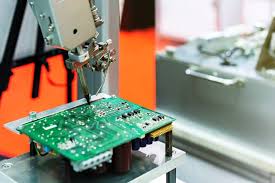
Can printed wiring assembly be folded or creased?
However, it’s essential to note that folding or creasing a printed wiring assembly requires careful consideration of several factors to ensure reliable performance and longevity. One key consideration is the choice of materials and components used in the assembly. Not all materials and components are suitable for bending or flexing, as some may be prone to cracking, delamination, or mechanical failure under stress. Therefore, designers must select materials and components that are specifically designed for flexible applications to ensure durability and reliability.
Furthermore, the design of the printed wiring assembly must take into account the intended folding or creasing points to minimize stress on critical components and traces. By strategically positioning components and routing traces, designers can distribute mechanical stress more evenly across the assembly, reducing the risk of damage or failure during folding or creasing. Additionally, implementing flexible interconnects or connectors can help accommodate movement between folded or creased sections of the PWA, further enhancing reliability.
Another consideration is the manufacturing process itself. Specialized equipment and techniques may be required to fabricate and assemble folded or creased printed wiring assemblies effectively. For example, precision folding or creasing machines may be used to achieve consistent and reliable results, while specialized soldering techniques may be employed to ensure robust electrical connections in folded or creased sections of the PWA. Manufacturers must invest in the necessary infrastructure and expertise to produce high-quality flexible PWAs that meet the demands of their target applications.
In conclusion, printed wiring assembly can indeed be folded or creased, thanks to innovations in flexible substrates and assembly techniques. Flexible PWAs enable the development of compact, lightweight, and versatile electronic devices that can bend, flex, or conform to various shapes and surfaces. However, achieving reliable performance and longevity requires careful consideration of materials, components, design, and manufacturing processes. By addressing these considerations, designers and manufacturers can unlock new possibilities for innovative product designs and user experiences in the rapidly evolving world of flexible electronics.

