
optimize conveyor angle in wave soldering for Assembly company pcb
In the realm of PCB assembly, wave soldering stands as a pivotal process, facilitating the efficient and reliable soldering of through-hole components to the PCB. Central to the success of wave soldering is the optimization of various parameters, including conveyor angle, which significantly influences the quality and integrity of solder joints in electronic assemblies. The conveyor angle, or the angle at which the PCB assembly travels through the wave soldering machine, plays a crucial role in ensuring uniform soldering and minimizing defects. Understanding how to optimize conveyor angle is essential for assembly companies seeking to achieve consistent soldering results and uphold high standards of quality and reliability.
One primary consideration in optimizing conveyor angle is ensuring proper immersion and contact between the assembly company pcb and the solder wave. The conveyor angle dictates the angle at which the PCB enters the solder wave, influencing the duration and quality of solder contact with the through-hole components. If the conveyor angle is too shallow, the PCB may not fully immerse in the solder wave, leading to incomplete solder wetting and insufficient solder joint formation. Conversely, if the conveyor angle is too steep, the PCB may experience excessive solder immersion, resulting in solder splashing, solder bridging, or component damage. By adjusting the conveyor angle to achieve the optimal immersion depth, assembly companies can ensure thorough solder coverage and uniform solder joint formation across the PCB assembly.
Moreover, optimizing conveyor angle helps minimize the risk of solder-related defects such as solder icicles, solder balls, or solder skips. The angle at which the PCB travels through the solder wave affects the flow dynamics of molten solder, influencing the distribution and deposition of solder on the PCB surface. An improperly adjusted conveyor angle can lead to uneven solder deposition, causing solder to accumulate in certain areas while leaving others under-soldered. By fine-tuning the conveyor angle to achieve uniform solder flow and coverage, assembly companies can reduce the occurrence of solder defects and improve the overall quality of solder joints in electronic assemblies.
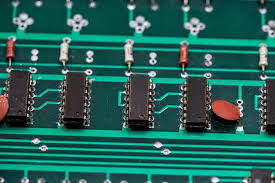
How do you optimize conveyor angle in wave soldering for Assembly company pcb?
Furthermore, optimizing conveyor angle contributes to the efficient utilization of solder and flux materials during wave soldering operations. The conveyor angle influences the dwell time of the PCB assembly within the solder wave, affecting the duration of exposure to solder and flux. By optimizing conveyor angle to achieve the desired solder immersion depth and contact time, assembly companies can minimize excess solder consumption and flux usage while maximizing solder joint quality. This not only reduces material waste and costs associated with wave soldering but also enhances the sustainability and efficiency of soldering operations.
In addition to solder quality and material efficiency, optimizing conveyor angle helps ensure the thermal stability of the PCB assembly during wave soldering. The angle at which the PCB travels through the solder wave influences the rate of heat transfer and thermal exposure experienced by the assembly. An improperly adjusted conveyor angle can result in uneven heating and cooling of the PCB, leading to thermal stresses, component damage, or solder joint reliability issues. By optimizing conveyor angle to achieve consistent thermal profiles and minimizing thermal gradients across the PCB assembly, assembly companies can mitigate the risk of thermal-related defects and ensure the integrity and reliability of solder joints in electronic assemblies.
In conclusion, optimizing conveyor angle is a critical aspect of wave soldering for PCB assembly companies, influencing solder immersion, solder distribution, solder joint quality, material efficiency, thermal stability, and overall soldering performance. By understanding the factors affecting conveyor angle and fine-tuning its settings to achieve optimal soldering conditions, assembly companies can enhance the quality, reliability, and efficiency of wave soldering operations, thereby meeting the demands of diverse industries and applications.